
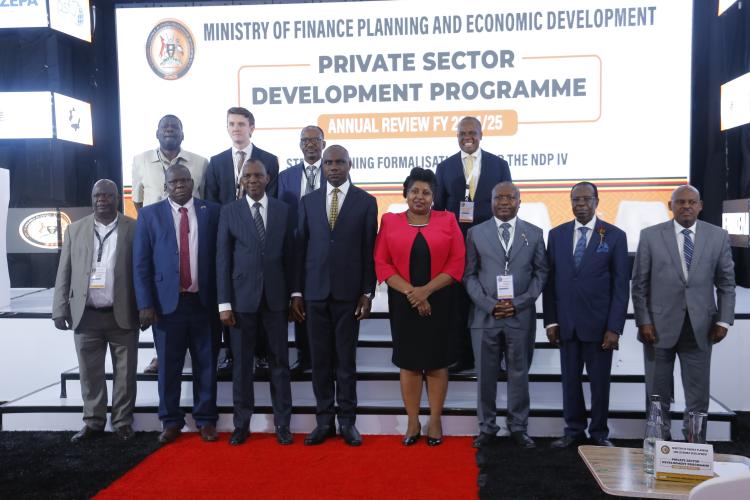
Private Sector Development (PSD) Programme Annual Review FY 2024/25
The Private Sector Development (PSD) Programme annual review held at Mestil hotel in Kampala was organised under the theme: ‘Strengthening formalization under the NDP IV.’
The PSD programme under the NDP III aimed at increasing the competitiveness of the private sector to drive sustainable inclusive growth by providing interventions to mitigate the persistent private sector challenges such as low survival and transition of MSMEs; high cost of doing business; limited capacity to access and sustain presence in key markets; a large informal sector and limited capacity of the private sector to maximize benefit from public investment opportunities.
Speaking at the official opening of the PSD programme annual review the Minister of State for General Duties, Henry Musasizi said Uganda’s economy has rebounded strongly under the able leadership of the NRM Government, adding that Uganda is recognized internationally as one of the fastest-growing economies in the world, with projections placing Uganda among the very top by 2031.
Musasizi said macroeconomic indicators also reflect resilience and stability, making Uganda increasingly attractive to investors.
He said financing to the private sector has expanded through the Uganda Development Bank capitalization which exceeded UGX 1.5 trillion over the past five years; through Emyooga (worth over UGX 500 billion) and UGX 3.26 trillion through the Parish Development Model (PDM) reaching millions of beneficiaries, deepening financial inclusion and wealth creation.
Musasizi said although the Tenfold Growth Strategy, is already integrated into the NDP IV, it introduces new challenges and demands a major leap in the delivery capacity under the PSD programme to achieve the ambitious goal of growing the economy 10 times to USD 500 billion by 2040.
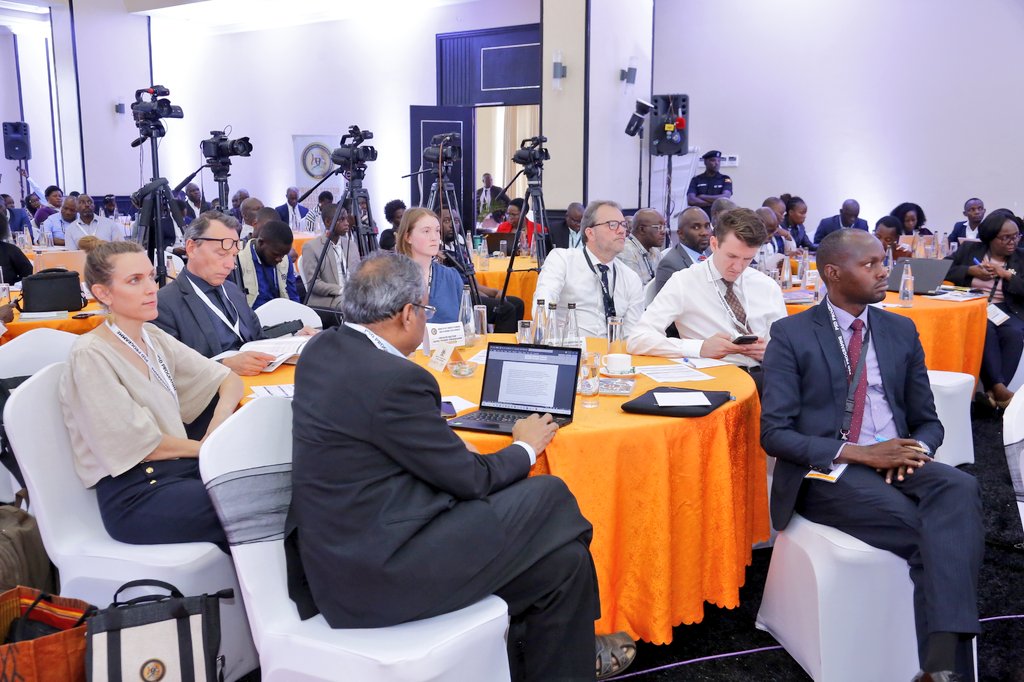
“This annual review is timely, as it allows us to prepare for the road ahead. Our focus will be intentional and results-driven,” said the Minister, highlighting cheaper and accessible credit, financial inclusion, managing arrears, private sector capacity and formalization as key priorities.
The Minister also launched the Private Sector Development Programme Implementation Action Plan.
The Director Economic Affairs, Moses Kaggwa represented the Permanent Secretary/Secretary to the Treasury (PSST) Dr. Ramathan Ggoobi at the annual review of the Private Sector Development (PSD) Programme – the final under the 3rd National Development Plan (NDP IIII).
Dr Ggoobi said the review gives an opportunity to jointly reflect on the implementation of the PSD programme over the past 5 years, and to consider changes and improvements as we embark on the implementation of NDP IV.
The PSST said government institutions with associated private sector responsibilities worked jointly under one programme with a specific goal of increasing private sector competitiveness to drive sustainable inclusive growth.
He said the 5 PSD Programme objectives to which these institutions have contributed include
(i) Sustainably lowering the cost of doing business;
(ii) Strengthening the organizational and institutional capacity of the private sector to drive growth;
(iii) Promoting local content in public programmes;
(iv) Strengthening the role of government in unlocking investment in strategic economic sectors; and
(v) Strengthening the enabling environment and enforcement of standards.
“As you will see in the PSD Annual report, there are areas where we have made good progress but there are also areas where our performance has been weak. For example, while non‑commercial lending to key growth sectors reached 4% of GDP from 1.5% in 2018/19, the share of the informal sector in the economy increased to 54.75% from 51% over the same period,” said the PSST.
Dr Ggoobi implored the stakeholders of the programme review to reflect on the programme experiences and lessons under NDP III and carefully consider the adjustments needed to improve effectiveness and ensure better performance of the PSD programme under the NDP IV.
“We will continue to work with all MDAs and other stakeholders to effectively tackle the key factors that have continued to inhibit private sector growth,” he said.
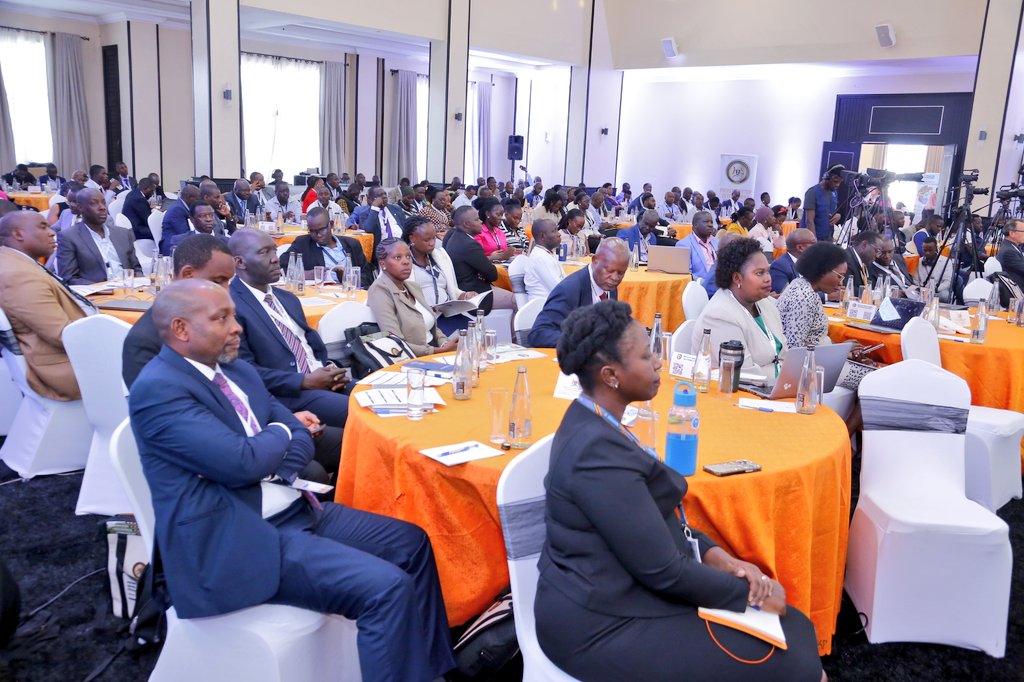
Highlights of Programme Performance
- In terms of financial performance, during FY2024/25, the PSD Programme was allocated UGX 2,046.64 billion. By the end of the year, UGX 1,812.92 billion (89%) had been released and UGX 1,757.10 billion (86% of the approved budget) absorbed. Overall, 97% of the released resources were spent, signaling strong budget execution across programme institutions.
- The share of the informal sector in the economy increased to 54.75%, against the NDP III annual target of 45%.
- Non- commercial lending to key growth sectors reached 4% of GDP, against the target of 3%.
- The value of public contracts awarded to local firms was 59.9%, against the target of 80%.
- Exports reached USD 13,190.6 million, way above the annual target of USD 7,356 million.
- The share of domestic credit to key growth sectors improved to 35% in FY2024/25, surpassing the annual target of 33.8%. These outcomes were supported by government schemes including PDM, Growth Opportunity and Productivity for Women Enterprises (GROW), Emyooga and the Agricultural Credit Facility (ACF).
- Enterprise development initiatives contributed to improved access to Business Development Services (BDS), with 15% of firms accessing BDS against the FY2024/25 target of 20%.
- Under the reservation scheme and related initiatives to enhance participation of local firms in public procurement, efforts resulted in 98% of contracts being awarded to local contractors, attracting 59% of the procurement value.
- Private sector investments supported by Uganda Development Corporation (UDC) reached 18, against a target of 12, while private sector investments facilitated through Public-Private Partnership (PPP) arrangements also reached 18, against a target of 10.
- Products certified increased from 4,951 to 5,703 (a 15.2% annual increase), exceeding the target of 10%. However, standards developed/enforced were 270, against a target of 600, and non- compliant outlets inspected were 4,023, against a target of 9,000. Enforcement actions led to seizure of 1,264,896.92 kg of non- compliant products.
- Industrial parks recorded increased uptake, with businesses in industrial parks reaching 348 and creating 159,959 jobs, alongside capital investments valued at about USD 4.183 billion.